Creating a legally recognised will in Ireland
A will can be legally recognised in Ireland when it is properly completed and executed in accordance with Irish law, including the requirements of the Succession Act 1965.
This is true of every will made in Ireland. Final legal validity depends on the user's individual circumstances and on the will being printed, signed, and witnessed correctly.
Willable is a document automation service that assists users in preparing a written will. It does not provide legal advice, legal representation, or personalised legal guidance.

What Irish Law Requires
Under the Succession Act 1965, a will is valid when some simple conditions are met:
You have capacity
- •You're 18 or over (or have been married/civil-partnered).
- •You understand what a will is and what you own.
- •You are of sound mind.
The will is 'in writing'
- •It can be typed and printed – it does not mean that the will must be handwritten.
- •We provide a print-ready PDF which is clearly 'in writing' and laid out for correct signing by testator and both witnesses.
It's properly signed and witnessed
- •You sign at the end of the will.
- •You sign in front of two witnesses who are present together.
- •They then sign in your presence. They do not need to read the will before signing.
There is no requirement in the Act that a solicitor drafts a will.
How Willable Helps You Get It Right
Our role is to help you understand and follow the legal steps involved in making a will.
When you use Willable, you get:
- A guided step-by-step wizard that helps you clearly set out your wishes.
- A professionally structured will document designed to align with Irish law and the formalities set out in the Succession Act 1965.
- A print-ready PDF that is clearly "in writing" and laid out for signing.
- A dedicated signature and witness section at the end of the will, so it's clear where everyone signs.
- Plain-English signing instructions, including who can act as a witness, what to do on the day, and how to store your will safely.
If you complete and sign your will in line with these instructions, it will be a traditional paper will that is capable of being submitted for probate in the usual way, subject to Irish law and your circumstances.

Myth vs Fact
Myth Buster 1
Myth: Witnesses need to read your will, before signing.Fact: Witnesses do not need to read the will document or content. They are simply there to witness your signature and that of the co-witness. All 3 people simply sign where indicated at the end of the document.Myth Buster 2
Myth: A will must be handwritten to be valid.Fact: Irish law does not require a will to be handwritten. A will can be typed or prepared online, as long as it is printed, signed, and properly witnessed in accordance with the Succession Act 1965.Myth Buster 3
Myth: I have to personally know my witnesses.Fact: Irish law does not require you to personally know your witnesses. They must be over 18, present at the same time when you sign, and not benefiting under the will. They do not need to be available in the future. Their job is done once they witness your signing.Myth Buster 4
Myth: "If I don't sit in a solicitor's office, it won't be legally valid."Fact: Irish law does not require you to visit a solicitor to make a valid will. What matters is that the will is in writing and properly witnessed. Willable also includes a professional solicitor review before you sign.Myth Buster 5
Myth: Once I make a will, I can't change itFact: You can change or update your will anytime as long as you have mental capacity. Updates can be done through a codicil or by making a new will. It is wise to review your will after major life events: marriage, divorce, buying a home, new children, etc.
When You Should Talk to a Solicitor
The Willable service is designed for straightforward estates. For more complex situations, you should get some legal advice. For example, if:
- You own a business or farm
- You have property outside Ireland
- You expect disputes in the family
- You need trusts for vulnerable dependants
A Note for Your Witnesses
Your Role: Simple and Quick
Being a witness to a will takes 2–3 minutes and involves only three steps:
- 1Watch me sign the will.
- 2Sign your name on the witness lines.
- 3Write your address (for identification only).
That's it. You do not need to read the will or know what's in it.
What You Do NOT Need to Do
- You do not become responsible for carrying out the will.
- You do not become legally liable for anything.
- You do not need to keep a copy of the will.
- You do not need to be available in the future.
- You do not need to know the contents of the will.
- You do not need to attend court or deal with probate.
Your job ends the moment you sign the will.
Even if you move away, lose contact, or pass away later, the will remains fully valid.
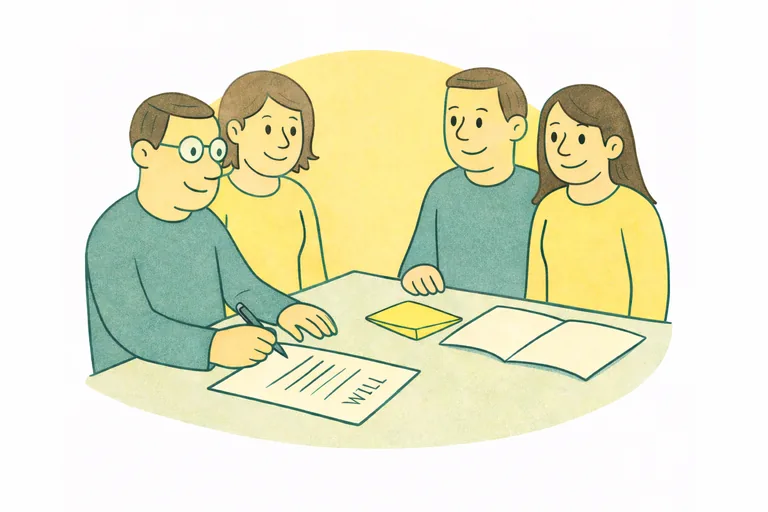
Your Will Signing Checklist
Ready to make your will legally valid? Our free signing checklist walks you through everything you need to know – from finding the right witnesses to signing correctly under Irish law. It also includes a handy page you can share with your witnesses. Download it now and keep it ready for signing day.