Why Neighbours Make Great Will Witnesses
Quick answer · Applies to Ireland
Neighbours are often ideal witnesses because they are nearby, easy to arrange, and usually not named in your will. A witness must be 18 or over, present when you sign, and not a beneficiary or the spouse of one.
You've already done the thoughtful part — you've written down what you want. The signing step is simply the moment where you and two other people confirm, together, that it's really you signing your will.
For most people, the biggest question is not "How do I sign?", it's "Who can I ask?"
That's where neighbours often shine.
The golden rule for witnessing
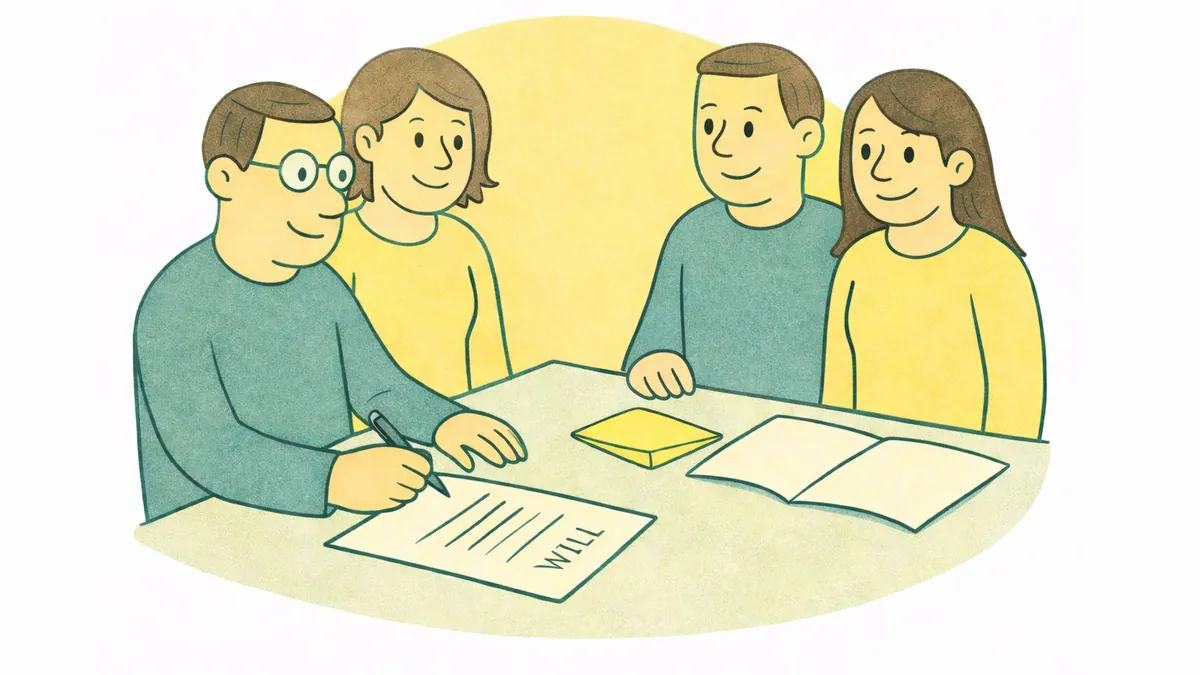
You and your two witnesses sign together, in the same room, at the same time.
That one detail keeps the whole thing straightforward. No back and forth, no chasing signatures later.
Who can be a witness
You need two adults (18 or over) who are independent of what's written in your will.
In plain English, that means:
- They are not named in your will
- They are not the partner of someone named in your will
- They do not need to read your will
They're there to watch you sign, then sign themselves to confirm they witnessed it.
Why neighbours are often the easiest option
Many people assume a witness has to be a professional. Usually, you simply need two adults who can be there in person, and who are not included in your will.
Neighbours are often a great fit because:
They're close by
Witnessing takes 2 to 3 minutes. Neighbours are the easiest people to ask for something quick, because they do not need to travel or plan ahead.
It's easy to do it "right now"
Because the golden rule is signing together, timing matters. Neighbours make it simple to say, "Are you free for a minute?" and get it done while everyone is in the same place.
They're typically independent
Most people do not name neighbours in their will, which makes them a good "neutral" choice.
It feels natural
Asking a neighbour for a small favour is normal. It can feel less formal than asking a coworker, and less emotionally loaded than asking a close friend.
Your neighbour's role — simple and quick
Being a witness involves only three steps:
1. Watch you sign the will.
2. Sign their name on the witness lines.
3. Write their address (for identification only).
That's it. They do not need to read the will or know what's in it.
What your neighbour does not need to do
People sometimes worry they are taking on responsibility by signing as a witness. They are not.
Your witness does not need to:
- Manage anything later
- Keep a copy of your will
- Be available in the future
- Know the contents of your will
- Go to court or deal with probate
If "probate" is a new word, it's simply the name for a process that can happen later to help carry out a will. Witnesses are not the ones who run that process.
Tip: A simple way to ask a neighbour
Keep it light and clear. Here's a script you can use:
"Could I borrow you for three minutes to witness me signing a document? You don't need to read it — just watch me sign, then sign as a witness."
If you want to add one extra line for reassurance:
"It's just confirming you saw me sign."
Quick checklist before you knock
- Two neighbours, age 18+
- Not named in your will
- Not partnered with anyone named
- Everyone can sign together, same room, same time
- Pens ready
One last reassurance
Your witness's job ends the moment they sign.
Even if you move away, lose touch, or they are not around later, the will can still stand as valid.
Want a hand with the signing step?
Open the signing checklist. It's a quick, step-by-step guide. If you get stuck, we're here to help. Willable